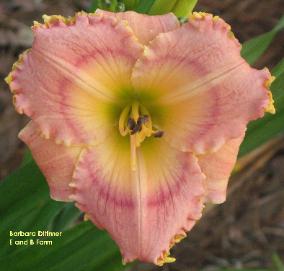
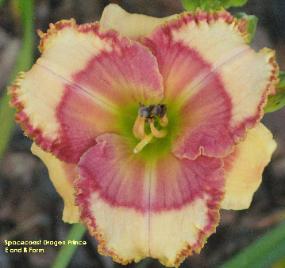
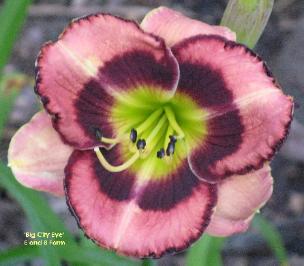
If ever there was a "sure thing" in the world of perennial flowers, it has to be daylilies. They grow from Minnesota to Florida, tolerate a
wide variety of soils and climate conditions and bloom faithfully every summer with very little attention.
Daylilies are true to their botanical name, Hemerocallis, which means "beauty for a day". Most daylily flowers open in the morning, then
close and die with nightfall. However, each scape (flower stalk) typically has more than a dozen flower buds, so an individual plant can
bloom for weeks. Many will rebloom, adding to their seasonal show.
Daylilies look best planted in groups, either in a perennial border or as mass plantings along a fence or walkway. Daylily leaves are
particularly good at hiding dying bulb foliage, so they are often inter-planted with spring-flowering bulbs, such as tulips and daffodils.
Daylily Types
Although there are many different species of daylilies, including the ubiqitous roadside lily (Hemerocallis fulva), the night-blooming,
citrus-scented H. citrina, and the early blooming, fragrant, lemon lily (H. flava), most daylilies planted by home gardeners are hybrid
cultivars.
There are thousands of daylily cultivars, and they can be grouped in a variety of ways. Some of the most common groupings are by
bloom time (early, mid-, and late), flower color (white to purple), scape height (6 inches to 3 feet tall), or flower form (trumpet, double,
ruffled, recurved). By choosing early-, mid-, and late-flowering cultivars, you can have daylily flowers blooming through most of the
summer. By choosing daylilies of various heights, flower colors, and shapes, you can mix and match your daylilies with low or tall
growing perennials or even plant them in containers. Daylilies come in many colors, from white, pink, orange, gold, lavender, purple,
and to the darkest red.
Daylilies can also be grouped by plant type. Here are some of the types of daylilies you may encounter:
Diploid: Referring to the 22 chromosomes in the plant, diploid daylilies tend to have more, but smaller flowers than tetraploids and a
graceful, old-fashioned form. Many double-flowered daylilies are diploids.
Tetraploid: Referring to the 44 chromosomes in the plant, tetraploid daylilies tend to have larger, more intensely colored flowers than
diploids. They're also supported by stronger and sturdier scapes.
Miniature: These compact varieties range from 12 to 25 inches tall. Flowers are smaller, too. Use them in tight spaces or at the
garden's edge.
Evergreen, Dormant and Semi-evergreen. These terms describe what happens to the foliage during the winter. Evergreens try to
grow whenever it turns warm; Dormant varieties die completely to the ground until spring; and Semi-evergreens are somewhere in
between. In general, dormant varieties are more cold hardy...although even evergreen types will do fairly well....particularly if mulched
for the winter.
Reblooming: Some varieties bloom a number of times during the summer. In general, they have a main bloom period in summer,
followed by more blooms, often right up until frost. Removing the faded flower heads encourages reblooming.
Each variety has a unique character. They include flowers with “eyes”, “halos”, “doubles”, “spiders”, “polychromes”, “color blends”,
“reblooms”, “extended blooms”, “green throats”, “yellow throats”, an infinite diversity.
The daylily seasons are listed as EE=extra early, E=early, M=midseason, ML=mid-late season, L=late season, and VL=very late
season. Rebloomers often extend into the late season too.
Planting Care
Daylilies flower best when planted in full sun (6 hours/day), on moist, yet well-drained soil. In hot climates, dark-colored cultivars should
receive some afternoon shade to help them retain their flower color. When planted in the correct location, daylilies will flower for years
with little care. Daylilies grow well in many types of soil. They also benefit greatly by growing in soils that are well drained and which
contain a good amount of organic matter. Add composted cow manure, compost, composted pine bark mulch or other organic matter
to the soil every three years in daylily beds. This is also the time to divide the clumps.
If buying daylilies by mail, plant them within a few days of receiving them. In the South, plant in spring or fall while temperatures are still
cool. In the North, daylilies should be planted in spring so they have plenty of time to get established before winter. However, daylilies
are such tough plants, that in the North, most can be planted anytime from spring through fall.
Amend the soil with compost before planting. Space plants 12 to 18 inches apart and plant so the crown is 1 inch below the soil. Do
not crowd the plants in the growing beds. Water well and mulch with bark, hay, or straw to conserve moisture and prevent weeds from
growing. In 8-10 days the plant will begin to "green up" and show growth in the middle of the plant. Water regularly in dry weather. The
usual 1-inch per week is sufficient. Watering with a soaker hose system is the best type of watering to insure that the blooms aren't
damaged. A few concerns with watering: overhead watering during the heat of the day will cause any open blooms to spot and/or wilt,
watering in the evening can also cause spots on the next day's blooms, and be careful not to over water. Although resilient once
established, young transplants should be kept free from weeds and well watered the first year. Water, supplied in sufficient amounts,
almost certainly increases the number and size of daylily blooms.
Dividing Daylilies
One of the few routine maintenance chores needed when growing daylilies is dividing them. Depending on their growth, your daylily
clump will usually become crowded after 3 to 4 years and flowering will diminish. In most areas, late summer is the best time to divide
daylilies. In the North, early spring is an alternate option, especially if the weather typically turns cold quickly in fall.
Dig up individual clumps with a sharp knife or spade. Separate healthy young plants (fans) with strong root systems. Cut back the
foliage and replant immediately in compost-amended soil or plant in containers. You'll have many extra plants from each clump to give
away to friends and neighbors. Discard any small or diseased plants.
Winter Care
In northern areas, newly planted daylilies should be mulched in late fall. This is important for young plants which otherwise may be
heaved out of the ground the first winter. Dead foliage can be removed in spring, unless it was diseased. In that case it is best to
remove it in fall.
How do I care for my daylilies?
The wise daylily gardener will apply a proper cultural program which includes watering, fertilizing, mulching, possibly spraying,
grooming, controlling weeds, and sanitation.
Most daylilies should be fertilized after the active growth has begun in the early spring. A much lighter application can be made after
most of the flowers have bloomed. Good daylily plant fertilizer should be used: i.e. 8-8-8, 12-12-12, or 13-13-13. Lately there has been
renewed emphasis placed upon liquid fertilizer applications. This is the quickest acting of all.
Fertilizing Daylilies
We use balanced 13-13-13 fertilizer on our daylilies but one with a higher phosphorous content is also appropriate (such as 12-18-12).
It's best to wait until the roots are established before fertilizing. Granulated fertilizer should be applied to the soil around the plant....try
to keep it from direct contact with the foliage. Water soluble fertilizer is easy to apply but should not be applied over the bloom since
most brands will stain the flower. We like to fertilize established plants early in the spring. Plants can also benefit from a second
application in mid summer.
Daylilies grow in a wide range of soils and conditions. To determine the nutrient needs of your soil, take a soil sample and have it
analyzed. Contact your local county agricultural agent for instructions. Daylilies can do well over a relatively wide soil pH range and
adjustment of pH need only be considered if the plants appear to be doing poorly. A soil test as recommended above should always
be conducted before amending with sulfur or lime. In the average home garden, a single fertilizer application in the spring is usually
sufficient, although even that may not be necessary every year. In extremely poor soils or on light or sandy soils which tend to leach
badly, more frequent application may be required. Consult with your local agriculture office for recommendations suitable to your soil
and climate.
Grooming
Keep your garden neat and tidy.
Many gardeners remove the day's blooms at the end of the day to give their gardens a pristine appearance.
If you hybridize, expect to leave the pollinated blooms on the plants until the blossom sheds and the tiny seed pod is formed
Controlling Weeds
The most effective weed control measures for the home garden are mulching and hoeing.
Sanitation
Proper sanitation measures lead to healthier daylilies.
In the spring, dead foliage and debris should be cleared away from around your daylilies.
During the growing season, damaged or diseased foliage should be removed.
At the end of the bloom season, cut off the bloom scapes to within a few inches of the ground unless you are hybridizing.
What pests affect daylilies?
Daylilies have three serious plant pests - - - aphids in the early spring, spider mites in dry weather, and thrips during bloom season.
Aphids and Spider Mites
Daylilies have their own specific aphid which feeds only on daylilies.
Aphids are most active in cool weather, spring and fall in temperate zones, and all winter long in the subtropics.
Controlling daylily aphids is not as easy as with other kinds of aphids, which are usually vulnerable to such soft controls as soaps. In
order to reach daylily aphids inside the fans, a pesticide with at least a mildly systemic action is needed.
There are a number of good aphid killers: Malathion, Spectracide, & Diazinon are three.
Do not use the pesticide Kelthane, which is known to harm daylilies.
Spider Mites are among the most common daylily pests. Spider mites are most active in hot, dry weather. You can get some control
of spider mites just by hosing them off as needed. Mites can be controlled with Plictran, Morestan, or Pentac. While these may be
difficult for the average gardener to obtain, as an alternative, several applications of Spectricide may be necessary for mite control.
The product Kelthane is NOT a desirable mitacide for daylily plants.
Again, do not use the pesticide Kelthane; it is known to harm daylilies.
Thrips
Several species of thrips are known to infest daylilies.
Control thrips by starting early in the growing season with a pesticide having either a systemic or long residual action.
Thrips are controlled with Spectricide, Malathion, or Diazinon.
To repeat, do not use the pesticide Kelthane.
Slugs and Snails
Slugs and snails feed on the young, tender tissues, causing ragged edges and holes.
They feed at night and hide during the day in cool, moist places, such as in mulch, under rocks and bricks, and in dead foliage.
Sanitation helps to control slugs and snails. Otherwise, control requires using pesticides which are targeted specifically at these pests.
Other Pests
There are other pests that attack daylilies.
Other insect pests which have been reported affecting daylilies include cutworms, tarnished plant bugs, cucumber beetles, wasps,
Japanese beetles, grasshoppers, and periodical cicadas.
Bulb mites may be involved in the transmittal of crown rot. Deer will sometimes eat daylily flower buds.
Daylily Rust
However, a new daylily disease -- a type of rust--has been spreading throughout the county, attacking many plants. To control this
disease, keep the area around daylilies open and airy, remove diseased foliage, and water plants when rainfall is insufficient.
The AHS has an excellent discussion of the subject, including suggestions for control, and we recommend you review their material if
you need more information: www.daylilies.org/ahs_dictionary/daylily_rust.html.
FOR MORE INFORMATION ABOUT THE DAYLILY, VISIT THE AHS WEBSITE
wide variety of soils and climate conditions and bloom faithfully every summer with very little attention.
Daylilies are true to their botanical name, Hemerocallis, which means "beauty for a day". Most daylily flowers open in the morning, then
close and die with nightfall. However, each scape (flower stalk) typically has more than a dozen flower buds, so an individual plant can
bloom for weeks. Many will rebloom, adding to their seasonal show.
Daylilies look best planted in groups, either in a perennial border or as mass plantings along a fence or walkway. Daylily leaves are
particularly good at hiding dying bulb foliage, so they are often inter-planted with spring-flowering bulbs, such as tulips and daffodils.
Daylily Types
Although there are many different species of daylilies, including the ubiqitous roadside lily (Hemerocallis fulva), the night-blooming,
citrus-scented H. citrina, and the early blooming, fragrant, lemon lily (H. flava), most daylilies planted by home gardeners are hybrid
cultivars.
There are thousands of daylily cultivars, and they can be grouped in a variety of ways. Some of the most common groupings are by
bloom time (early, mid-, and late), flower color (white to purple), scape height (6 inches to 3 feet tall), or flower form (trumpet, double,
ruffled, recurved). By choosing early-, mid-, and late-flowering cultivars, you can have daylily flowers blooming through most of the
summer. By choosing daylilies of various heights, flower colors, and shapes, you can mix and match your daylilies with low or tall
growing perennials or even plant them in containers. Daylilies come in many colors, from white, pink, orange, gold, lavender, purple,
and to the darkest red.
Daylilies can also be grouped by plant type. Here are some of the types of daylilies you may encounter:
Diploid: Referring to the 22 chromosomes in the plant, diploid daylilies tend to have more, but smaller flowers than tetraploids and a
graceful, old-fashioned form. Many double-flowered daylilies are diploids.
Tetraploid: Referring to the 44 chromosomes in the plant, tetraploid daylilies tend to have larger, more intensely colored flowers than
diploids. They're also supported by stronger and sturdier scapes.
Miniature: These compact varieties range from 12 to 25 inches tall. Flowers are smaller, too. Use them in tight spaces or at the
garden's edge.
Evergreen, Dormant and Semi-evergreen. These terms describe what happens to the foliage during the winter. Evergreens try to
grow whenever it turns warm; Dormant varieties die completely to the ground until spring; and Semi-evergreens are somewhere in
between. In general, dormant varieties are more cold hardy...although even evergreen types will do fairly well....particularly if mulched
for the winter.
Reblooming: Some varieties bloom a number of times during the summer. In general, they have a main bloom period in summer,
followed by more blooms, often right up until frost. Removing the faded flower heads encourages reblooming.
Each variety has a unique character. They include flowers with “eyes”, “halos”, “doubles”, “spiders”, “polychromes”, “color blends”,
“reblooms”, “extended blooms”, “green throats”, “yellow throats”, an infinite diversity.
The daylily seasons are listed as EE=extra early, E=early, M=midseason, ML=mid-late season, L=late season, and VL=very late
season. Rebloomers often extend into the late season too.
Planting Care
Daylilies flower best when planted in full sun (6 hours/day), on moist, yet well-drained soil. In hot climates, dark-colored cultivars should
receive some afternoon shade to help them retain their flower color. When planted in the correct location, daylilies will flower for years
with little care. Daylilies grow well in many types of soil. They also benefit greatly by growing in soils that are well drained and which
contain a good amount of organic matter. Add composted cow manure, compost, composted pine bark mulch or other organic matter
to the soil every three years in daylily beds. This is also the time to divide the clumps.
If buying daylilies by mail, plant them within a few days of receiving them. In the South, plant in spring or fall while temperatures are still
cool. In the North, daylilies should be planted in spring so they have plenty of time to get established before winter. However, daylilies
are such tough plants, that in the North, most can be planted anytime from spring through fall.
Amend the soil with compost before planting. Space plants 12 to 18 inches apart and plant so the crown is 1 inch below the soil. Do
not crowd the plants in the growing beds. Water well and mulch with bark, hay, or straw to conserve moisture and prevent weeds from
growing. In 8-10 days the plant will begin to "green up" and show growth in the middle of the plant. Water regularly in dry weather. The
usual 1-inch per week is sufficient. Watering with a soaker hose system is the best type of watering to insure that the blooms aren't
damaged. A few concerns with watering: overhead watering during the heat of the day will cause any open blooms to spot and/or wilt,
watering in the evening can also cause spots on the next day's blooms, and be careful not to over water. Although resilient once
established, young transplants should be kept free from weeds and well watered the first year. Water, supplied in sufficient amounts,
almost certainly increases the number and size of daylily blooms.
Dividing Daylilies
One of the few routine maintenance chores needed when growing daylilies is dividing them. Depending on their growth, your daylily
clump will usually become crowded after 3 to 4 years and flowering will diminish. In most areas, late summer is the best time to divide
daylilies. In the North, early spring is an alternate option, especially if the weather typically turns cold quickly in fall.
Dig up individual clumps with a sharp knife or spade. Separate healthy young plants (fans) with strong root systems. Cut back the
foliage and replant immediately in compost-amended soil or plant in containers. You'll have many extra plants from each clump to give
away to friends and neighbors. Discard any small or diseased plants.
Winter Care
In northern areas, newly planted daylilies should be mulched in late fall. This is important for young plants which otherwise may be
heaved out of the ground the first winter. Dead foliage can be removed in spring, unless it was diseased. In that case it is best to
remove it in fall.
How do I care for my daylilies?
The wise daylily gardener will apply a proper cultural program which includes watering, fertilizing, mulching, possibly spraying,
grooming, controlling weeds, and sanitation.
Most daylilies should be fertilized after the active growth has begun in the early spring. A much lighter application can be made after
most of the flowers have bloomed. Good daylily plant fertilizer should be used: i.e. 8-8-8, 12-12-12, or 13-13-13. Lately there has been
renewed emphasis placed upon liquid fertilizer applications. This is the quickest acting of all.
Fertilizing Daylilies
We use balanced 13-13-13 fertilizer on our daylilies but one with a higher phosphorous content is also appropriate (such as 12-18-12).
It's best to wait until the roots are established before fertilizing. Granulated fertilizer should be applied to the soil around the plant....try
to keep it from direct contact with the foliage. Water soluble fertilizer is easy to apply but should not be applied over the bloom since
most brands will stain the flower. We like to fertilize established plants early in the spring. Plants can also benefit from a second
application in mid summer.
Daylilies grow in a wide range of soils and conditions. To determine the nutrient needs of your soil, take a soil sample and have it
analyzed. Contact your local county agricultural agent for instructions. Daylilies can do well over a relatively wide soil pH range and
adjustment of pH need only be considered if the plants appear to be doing poorly. A soil test as recommended above should always
be conducted before amending with sulfur or lime. In the average home garden, a single fertilizer application in the spring is usually
sufficient, although even that may not be necessary every year. In extremely poor soils or on light or sandy soils which tend to leach
badly, more frequent application may be required. Consult with your local agriculture office for recommendations suitable to your soil
and climate.
Grooming
Keep your garden neat and tidy.
Many gardeners remove the day's blooms at the end of the day to give their gardens a pristine appearance.
If you hybridize, expect to leave the pollinated blooms on the plants until the blossom sheds and the tiny seed pod is formed
Controlling Weeds
The most effective weed control measures for the home garden are mulching and hoeing.
Sanitation
Proper sanitation measures lead to healthier daylilies.
In the spring, dead foliage and debris should be cleared away from around your daylilies.
During the growing season, damaged or diseased foliage should be removed.
At the end of the bloom season, cut off the bloom scapes to within a few inches of the ground unless you are hybridizing.
What pests affect daylilies?
Daylilies have three serious plant pests - - - aphids in the early spring, spider mites in dry weather, and thrips during bloom season.
Aphids and Spider Mites
Daylilies have their own specific aphid which feeds only on daylilies.
Aphids are most active in cool weather, spring and fall in temperate zones, and all winter long in the subtropics.
Controlling daylily aphids is not as easy as with other kinds of aphids, which are usually vulnerable to such soft controls as soaps. In
order to reach daylily aphids inside the fans, a pesticide with at least a mildly systemic action is needed.
There are a number of good aphid killers: Malathion, Spectracide, & Diazinon are three.
Do not use the pesticide Kelthane, which is known to harm daylilies.
Spider Mites are among the most common daylily pests. Spider mites are most active in hot, dry weather. You can get some control
of spider mites just by hosing them off as needed. Mites can be controlled with Plictran, Morestan, or Pentac. While these may be
difficult for the average gardener to obtain, as an alternative, several applications of Spectricide may be necessary for mite control.
The product Kelthane is NOT a desirable mitacide for daylily plants.
Again, do not use the pesticide Kelthane; it is known to harm daylilies.
Thrips
Several species of thrips are known to infest daylilies.
Control thrips by starting early in the growing season with a pesticide having either a systemic or long residual action.
Thrips are controlled with Spectricide, Malathion, or Diazinon.
To repeat, do not use the pesticide Kelthane.
Slugs and Snails
Slugs and snails feed on the young, tender tissues, causing ragged edges and holes.
They feed at night and hide during the day in cool, moist places, such as in mulch, under rocks and bricks, and in dead foliage.
Sanitation helps to control slugs and snails. Otherwise, control requires using pesticides which are targeted specifically at these pests.
Other Pests
There are other pests that attack daylilies.
Other insect pests which have been reported affecting daylilies include cutworms, tarnished plant bugs, cucumber beetles, wasps,
Japanese beetles, grasshoppers, and periodical cicadas.
Bulb mites may be involved in the transmittal of crown rot. Deer will sometimes eat daylily flower buds.
Daylily Rust
However, a new daylily disease -- a type of rust--has been spreading throughout the county, attacking many plants. To control this
disease, keep the area around daylilies open and airy, remove diseased foliage, and water plants when rainfall is insufficient.
The AHS has an excellent discussion of the subject, including suggestions for control, and we recommend you review their material if
you need more information: www.daylilies.org/ahs_dictionary/daylily_rust.html.
FOR MORE INFORMATION ABOUT THE DAYLILY, VISIT THE AHS WEBSITE
| DAYLILY CARE AND CULTURE |
| If you aren't a member of the American Hemerocallis Society, please consider joining. For a printable copy of the membership form and membership information, visit the AHS website. |

| E AND B FARM Eddie and Belinda Winters 541 J. C. Sullivan Road Louisville, MS 39339 (662) 736-0914 belinda@eandbfarm.com |
 | |  | |  | |  |
 | |  | |  | |  | |  | |  | |  | |  | |  |